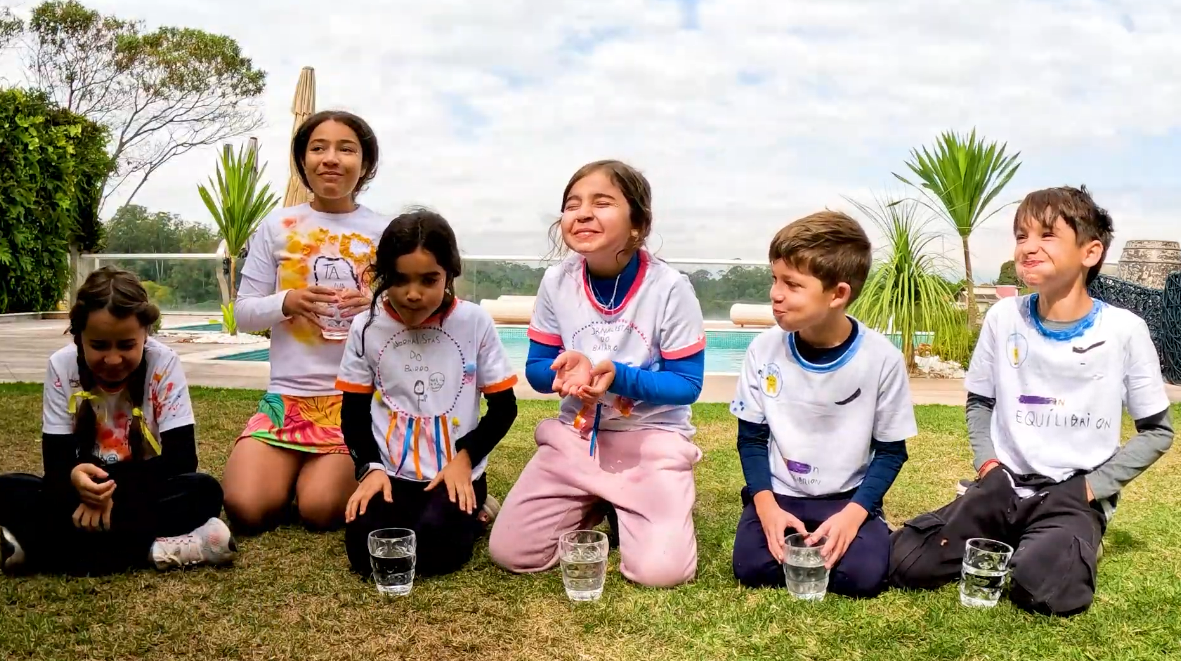
In our series of weekly live sessions, EquilibriON had the honor of hosting speech therapist Gabriella Franzoso to discuss, alongside our co-founder Erick Melo, a very important topic: the impact of excessive screen use on children’s speech and language development. If you haven’t watched it yet, the content is also available on our YouTube channel and addresses fundamental issues for parents who want to understand how technology can affect their children’s development. Let’s learn more about “The Impact of Screens on Child Development: How Screens Affect Speech and Language”!
Watch the video:
The Impact of Screens on Children’s Communication
Gabriella, with extensive experience in the field, explained to us that excessive screen use can harm children’s cognitive and social development. During early childhood, especially before the age of two, social interaction and continuous stimulation through play, reading, and conversations are essential for healthy speech development. Screen use during this period can negatively affect these developmental milestones.
When is the Right Time for Screens?
The World Health Organization (WHO) recommends that children under two years old have no contact with screens. This includes everything from educational videos to those songs that parents often use to entertain their little ones. Gabriella emphasizes that children’s brains need direct stimuli, such as reading, physical play, and social interaction, to develop properly. Zero screens until age two. After this age, strict control should be maintained.
What Happens when Screen Time is Excessive?
Excessive screen use can delay speech and language development, creating difficulties in expression and even speech disorders. Gabriella told us about cases such as a child who began to imitate a Rio de Janeiro accent due to excessive videos watched on digital platforms, even without having contact with people from that region. This shows how screens influence behavior and speech development in unintended ways.

The Impact of Screens on Child Development: How Screens Affect Children’s Speech and Language. Erick Melo chats with speech therapist Gabriella Franzoso about the impact of screens on speech development; watch the video
How to Balance Screen Use?
With the pandemic, many parents found themselves dependent on technology to entertain their children at home. Gabriella suggests that instead of drastically cutting screen use, parents should establish a gradual “digital weaning”, making screen time more controlled and agreeing with the child on specific times for it. The most important thing is to set an example and create opportunities for real interactions, such as games, storytelling, and play that stimulate creativity and communication.
Practical Tips for Balancing Screen Time
-
Create screen-free times, such as during meals and before bedtime.
-
Encourage reading, rhyming games, and storytelling.
-
Play together! Games like Monopoly or Risk, for example, are an excellent way to engage children in healthy and fun interactions.
-
Do sensory activities like imitating sounds and movements, or activities like “Mata Barata” (a paper game).
Want to Know more about the Impact of Screens on Children’s Lives?
Take our Digital Dependency test. The result can be an excellent starting point for improving screen balance in your home.
Follow us on Instagram: @equilibrion
Follow us on YouTube: EquilibriON
Learn more about our solutions: equilibrionline.com.br